2026-09-11
Keep Hundreds in Your Pocket: 9 Beginner Car Repairs You Can Do Yourself (And 9 You Shouldn't Touch)
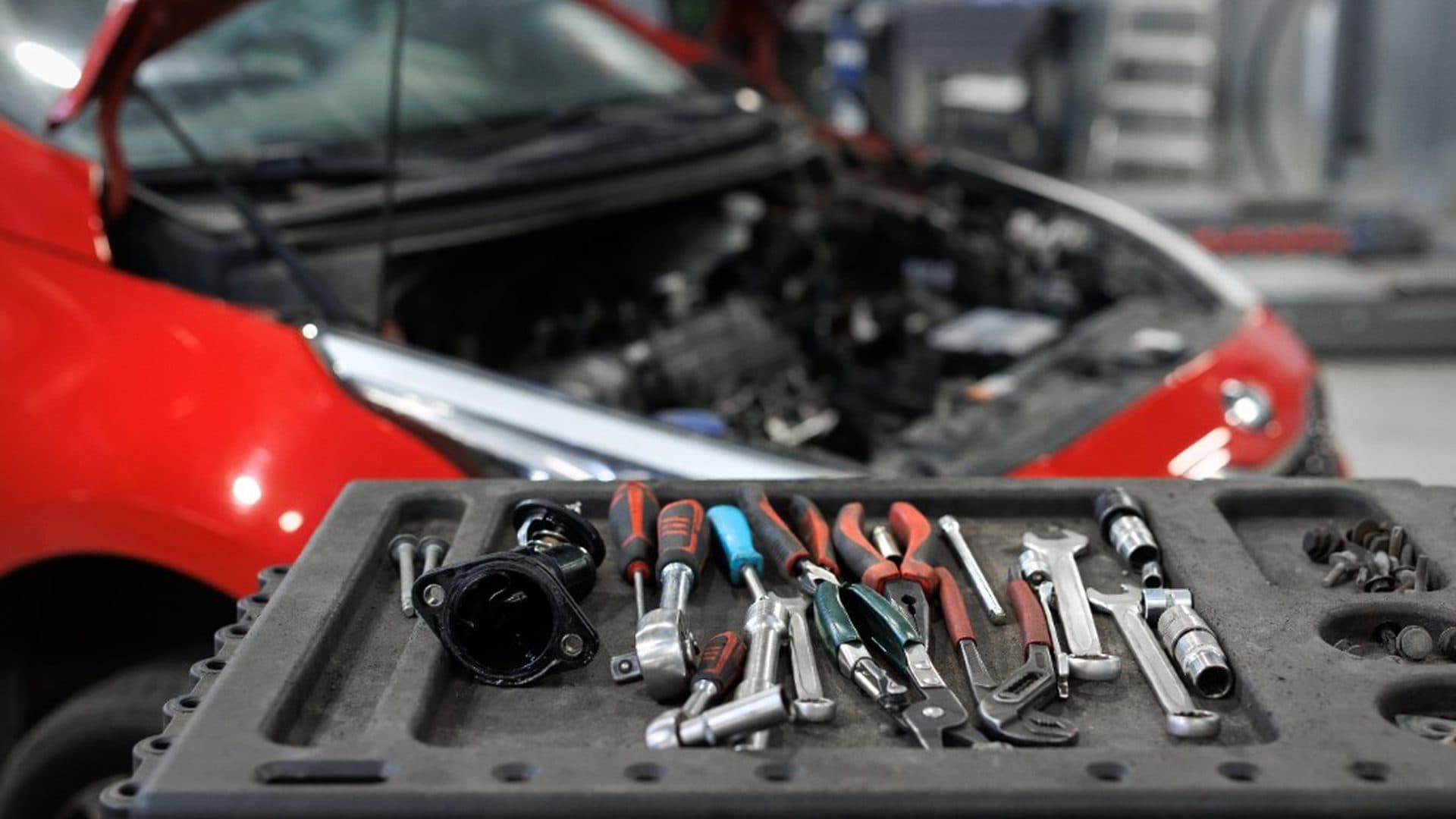
Wrenching on your own car is one of the fastest ways to save money, but there is a thin line between keeping $500 in your wallet and causing $5,000 in engine damage. Knowing what jobs to tackle in your driveway—and which ones to leave alone—is the difference between a successful weekend project and a towed vehicle.
Before tearing into any of these, you can look up the exact factory removal and installation procedures, plus the estimated labor times, for free at Lemon Manuals.
Here are the top money-saving jobs you should be doing yourself, paired with the dangerous traps you need to avoid.
1. Brakes
The Money-Saver: Replacing brake pads and rotors. A shop will easily charge you $400 to $500 for a front brake job. You can do it yourself for about $150 in parts. You don't need specialty tools—just pull the wheel, unbolt the caliper, pull the old rotor, and bolt the new parts up with the appropriate lubricants.
The Trap: Swapping the master cylinder or brake booster. Whenever you replace a master cylinder, you introduce air into all your brake lines and likely your ABS module. If you don't bleed the system perfectly, you will end up with squishy brakes or no brakes at all.
2. Suspension
The Money-Saver: Installing pre-assembled struts. Buying a pre-packaged strut assembly (where the new spring is already compressed and bolted in) makes swapping your suspension a simple bolt-out, bolt-in job.
The Trap: Reusing old springs. You might save $100 per corner by taking a strut apart to transfer the old spring to a new shock, but you are dealing with massive kinetic energy. Coil springs are under a ton of pressure. If the spring compressor slips, the spring can blow up in your face and cause severe injury.
3. Steering & Hubs
The Money-Saver: Swapping a hydraulic power steering pump. This requires basic tools. You pull the serpentine belt off, unbolt the old pump, bolt the new one on, and add fluid. You rarely even need to bleed the system.
The Trap: Replacing press-in wheel bearings. Getting a pressed bearing out of a knuckle requires a heavy-duty hydraulic shop press. If you try to hack it together in your driveway with a bottle jack and get it wrong, a failed wheel bearing can overheat and cause the wheel to literally fly off the car at highway speeds. For bolt-on hubs, see how to replace a wheel hub bearing assembly.
4. Belts
The Money-Saver: Changing your serpentine (accessory) belt. If your car screeches when you start it in the morning, your serpentine belt is likely worn. Because it sits on the outside of the engine running the alternator and AC, you just release the tensioner, pull the old belt off, and thread the new one on.
The Trap: Replacing a timing belt. A timing belt connects the top and bottom halves of your engine. Getting to it requires removing a massive volume of engine covers and accessories. If you put the new belt on and you are off by a single gear tooth, the pistons will smash into the valves the second you start the car, destroying the engine.
5. Engine Cooling
The Money-Saver: Replacing the thermostat. Thermostats control how much coolant flows through your engine. When they stick closed, your engine overheats. A new one costs $10 to $20 and usually takes 30 minutes to swap out.
The Trap: Doing a head gasket. When a head gasket blows, coolant dumps straight into the cylinders. Fixing it means tearing apart half the motor and having the cylinder heads machined flat at a professional shop. Mess up the installation, and you will immediately blow the new gasket.
6. Air & Fuel Delivery
The Money-Saver: Cleaning the throttle body. A dirty throttle body causes rough idling. You can easily unbolt it and wipe out the carbon buildup with throttle body cleaner (just don't force the butterfly valve open manually), restoring your engine's idle performance.
The Trap: Replacing an in-tank fuel pump. Changing a fuel pump often means dropping a heavy gas tank from underneath the car. The system is under high pressure, requires specialty disconnect tools for the lines, and exposes you to raw fuel and dangerous fumes.
7. Electrical
The Money-Saver: Bolting in a new alternator. A failing alternator is often misdiagnosed as a bad battery. If you know the alternator is dead, replacing it yourself can save you $300 to $500. You just move the belt, unbolt the unit, and plug the new one in. See dead battery or bad alternator if you are still sorting the diagnosis.
The Trap: Chasing electrical gremlins. Diagnosing why your dash went dead or your windows won't roll up requires advanced equipment and deep schematic knowledge. If you probe the wrong wire with a multimeter, you can easily backfeed voltage and fry the vehicle's main computer (ECU), costing thousands to fix.
8. Air Conditioning
The Money-Saver: Replacing the blower motor. If your vents aren't pushing any air at all, your blower motor is likely dead. It sits right under the glovebox inside the cabin. You can unbolt and replace it without ever touching the pressurized refrigerant lines under the hood.
The Trap: Using DIY AC recharge cans. Recharging your AC with an auto-parts store can is a gamble. Without proper commercial gauges, you don't know the system pressures. You can easily overcharge the system, blow out the expensive compressor, or have high-pressure refrigerant blow up in your face.
9. Transmission
The Money-Saver: Exchanging the transmission fluid. People ignore this, but it is often easier than an oil change. Draining and filling $30 worth of clean fluid prevents the transmission from slipping and slamming into gear, extending its life significantly.
The Trap: Internal transmission repairs. Modern transmissions are incredibly heavy and complex. Trying to replace internal solenoids or clutch packs without specialty know-how usually ends with irreparable damage to a part that costs more than the car is worth to replace.