2026-09-09
Rear Drum Brakes vs EPB Discs: How to Tell and When Shoes Need Work
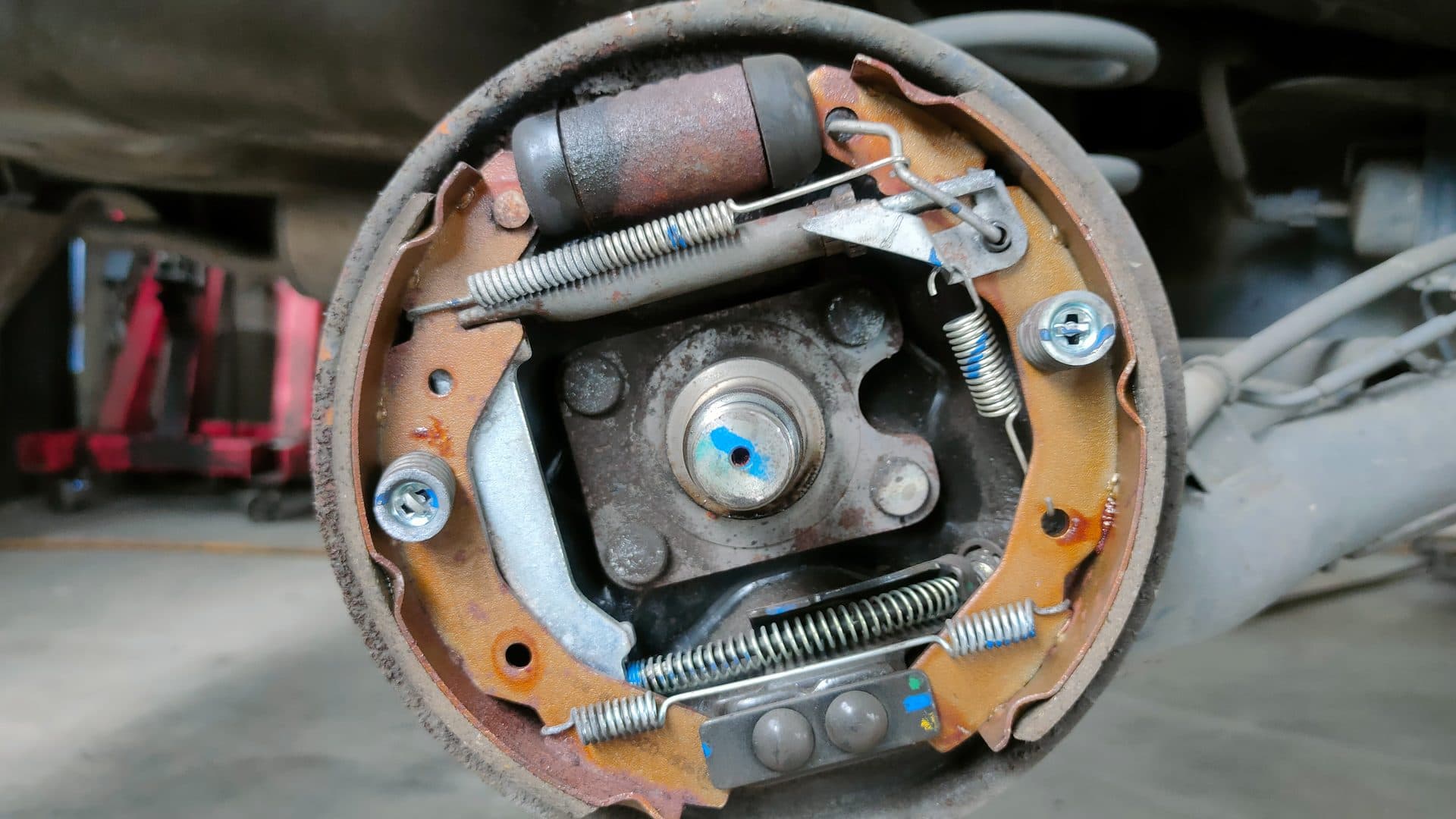
Many daily drivers still use traditional rear drum brakes instead of modern electronic parking brake (EPB) discs. You can tell the difference by looking through the spokes of your rear wheel. If you see a smooth, round metal hat covering the hub with no brake caliper attached, you have drum brakes. If you see a caliper with a plastic electrical motor bolted to it, you have an EPB system. Drum brakes use hydraulic pressure to push curved shoes outward against the inside of the drum, whereas EPB discs squeeze pads against a rotor. Knowing which system you have before ordering parts prevents damaged EPB motors and wasted driveway time.
How do I tell if my car has rear drum brakes, standard discs, or an EPB?
The easiest way to identify your rear brake type is to look through the wheel spokes at the hub on a level, chocked car. Drums look like a solid metal bowl, standard discs have a caliper with a metal cable, and EPB discs have a caliper with an electric motor bolted to the back.
Guessing wrong is how a “quick pad job” turns into a broken EPB motor, or a drum that refuses to come off because nobody backed off the shoes. Use this breakdown to identify your setup:
| Brake Type | Visual Identifier | Parking Brake Mechanism |
|---|---|---|
| Rear Drums | Round metal hat covering the hub; no caliper | Mechanical cable expands internal shoes |
| Standard Discs | Caliper on a rotor with a wire cable attached | Mechanical cable pulls a lever on the caliper |
| EPB Discs | Caliper on a rotor with a plastic motor bolted on | Electric motor winds the caliper piston out |
How do rear drum brakes actually work?
When you press the brake pedal, hydraulic fluid pressure expands a wheel cylinder inside the brake drum. This pushes two curved brake shoes outward so their friction material drags against the inside of the spinning metal housing, slowing the car down.
While disc brakes squeeze a rotor, drums expand against a housing. Because they are enclosed, they trap heat and brake dust, and the shoes require periodic manual adjustment to sit at the correct distance from the drum. On many commuter cars like the Honda Civic, Toyota Corolla, and Nissan Versa, these exact same rear shoes are also mechanically pulled by a cable to act as your parking brake.
Pull the drum and you are looking at a small pile of hardware that all has to go back in order:
- Adjuster lever: keeps the shoe-to-drum gap honest as the lining wears, so pedal feel does not go long between visits.
- Brake shoe: the curved steel backing that carries the lining. Pedal pressure spreads both shoes out against the drum.
- Brake lining: the friction material bonded to the shoe. That is what actually rubs the drum, dumps the heat, and stops the wheel.
- Anchor: a fixed post on the back plate that the shoes rest against when you are off the pedal, so they do not wander around the housing.
- Back plate: the stamped steel panel everything bolts to. It also keeps road grit out of the mechanism.
- Parking lever: the arm the parking-brake cable pulls. It wedges the same shoes into the drum so the car stays put on a hill.
- Wheel cylinder: the hydraulic unit with two pistons. Fluid pressure pushes those pistons out and the shoes follow.
- Return spring: pulls the shoes back off the drum when you lift off the pedal so they do not drag.
- Shoe hold-down spring: a light spring that keeps each shoe seated on the back plate without locking it in place.
- Hold-down pin: the pin-and-clip that the hold-down spring hooks to, so the shoe cannot fall off the plate while the wheel is turning.
What are the signs that my rear brake shoes need replacing?
Rear brake shoes need replacing when you hear grinding from the back wheels, your parking brake fails to hold the car on a hill, you feel a delayed or uneven brake pedal, or the car makes a scraping noise while rolling.
Because the front brakes handle about 70% of a vehicle's stopping power, the rear drums often outlast front pads and are completely ignored until something obvious shows up. Grinding means the shoe lining is completely gone and metal rivets are cutting into your drum. Booking a brake service when the shoes are just worn is significantly cheaper than waiting until the drum is chewed up and too thin to legally reuse.
How do you replace rear drum brakes in your driveway?
Replacing rear drum brakes involves lifting the car, removing the metal drum, and stripping off the old shoes, springs, clips, and wheel cylinder. You then install the new hardware in the exact correct order, adjust the star wheel so the shoes sit tight but don't drag, and test the parking brake.
This is not a simple two-clip pad swap. A stuck drum often requires backing off the star adjuster just to get the hat off the hub. You must inspect the shoes, springs, and drum thickness. If the springs are fatigued or the drums are grooved, they go in the trash.
If you prefer to buy your parts at retail, Road Wrencher will inspect the system in your driveway, verify your parts list, and install what you purchased for a flat labor fee.
FAQ
Do cars still use brake shoes?
Yes. Many modern commuter cars run disc pads in the front and drum shoes in the rear. Additionally, some heavy-duty trucks and SUVs with four-wheel disc brakes hide a small set of brake shoes inside the rear rotor hat specifically for the parking brake.
Are drum brakes the same as an electronic parking brake (EPB)?
No. An EPB uses a small electric motor bolted to a rear disc caliper to lock the wheels. Drum brakes use curved brake shoes inside a metal hat. The two systems do not share parts or service procedures. See how to change rear brakes with an electronic parking brake if you have the motor.
Can I drive with worn brake shoes?
Your car will still stop because the front brakes do most of the work, but driving on worn shoes guarantees the metal backing plates will grind into the drum. Catching the wear early keeps it a "shoes-only" job, which is much cheaper than replacing both the shoes and the drums.
What should I do if I hear a rear scrape or my parking brake slips?
Send the year, make, model, and a photo of your rear wheel hub through our contact form or call (770) 686-7955. We will tell you whether you are looking at drums or an EPB caliper before anyone wastes money ordering the wrong parts.