
2026-11-03
Engine Overheating? How to Find the Problem in Your Cooling System
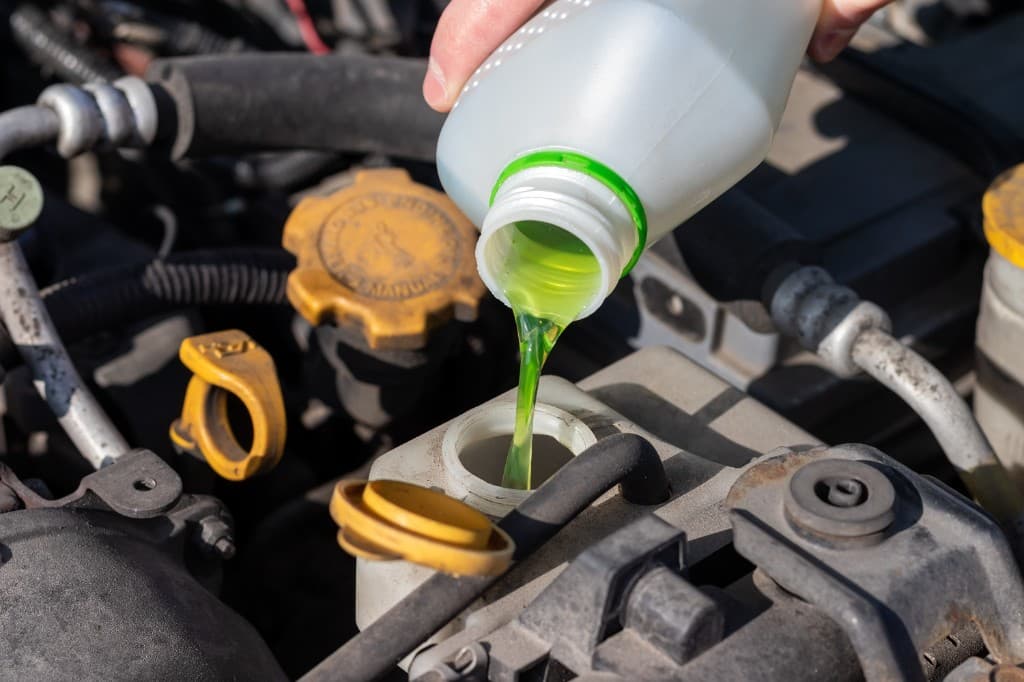
The Short Answer: Why Is My Engine Overheating?
Most overheating comes down to one of eight things: low coolant, a bad radiator cap, a thermostat stuck shut, a dead cooling fan, a weak water pump, a collapsed or clogged hose, a plugged radiator, or a blown head gasket. Don't start by tearing things apart. Check the cheap, easy stuff first (coolant level, cap, pressure test), then work your way up to the bigger jobs.
Below is the order I'd go in, plus answers to the questions customers ask me most.
Before You Touch Anything
- Let the engine cool all the way down. Never pop the radiator cap or coolant bottle cap on a hot engine. That coolant is under pressure and it will burn you.
- Keep your hands, rags, and tools away from the belts and fans. An electric fan can kick on by itself if the engine is still warm, even with the key off.
- Used coolant is poison. Take it to a recycler, don't dump it.
- When you pressure test, never go over the number stamped on the cap. On most cars that's 13 to 16 psi.
The Order I Check Things In
Go from cheapest and quickest to the most work. You don't want to pull a water pump before you've ruled out a $15 cap.
- Coolant level, coolant condition, and visible leaks
- Radiator cap (and the coolant bottle cap, if that's where your cap lives)
- Cooling system pressure test with the engine off
- Radiator and heater hoses
- Thermostat
- Cooling fans
- Water pump and drive belt
- Radiator and heater core flow
- Head gasket (combustion leak) test
- Flush, refill, and bleed the air
Step 1: Check the Coolant and Look for Leaks
Start with a cold engine and just look.
- Is the level where it should be in the reservoir (and the radiator, if yours has a fill neck there)?
- What does the coolant look like? Rusty, oily, or sludgy coolant tells you it's been neglected or something's leaking into it.
- Look around the hoses, radiator, water pump, and thermostat housing for crusty residue, drips, or wet spots.
Can UV dye find a coolant leak? Yes. It's not just for oil. Just buy a dye made for coolant, since oil dye won't mix right. Add it cold, run the engine up to temperature, then go over everything with a UV light and the yellow glasses. Leaks glow yellow-green. It's great for slow seeps and leaks hiding behind other parts. What it won't do is find an internal head gasket leak.
Step 2: Test the Radiator Cap
A weak cap is cheap to fix and causes a lot of grief, so check it early.
Why a weak cap makes the engine run hot
Coolant boils at a higher temperature when it's under pressure. A 50/50 mix boils at roughly 223°F with no pressure, and every psi adds about 3°F. A good 15 psi cap pushes that up around 265°F. If your cap only holds a few psi, the coolant can boil at the hot spots in the engine when you're working it hard. Steam pockets form, coolant gets shoved out, and the temperature shoots up. That's your boil-over.
The two valves inside the cap
Both valves live in the cap itself:
- Pressure valve: the big spring-loaded seal on the bottom. It lets coolant out to the overflow when pressure goes past the cap's rating.
- Vacuum (vent) valve: a smaller valve in the middle of that seal. When the engine cools and the system pressure drops below the air outside, it opens and lets coolant flow back in from the overflow tank.
Flip a cap over and you'll see both. The little center valve should move freely and snap back when you press it.
What a stuck vacuum valve does
- Stuck closed: Coolant can't get pulled back in as the engine cools, so the outside air squeezes the system. Soft hoses collapse, the overflow tank stays full, and the radiator ends up low.
- Stuck open: The system can't hold pressure. You get overheating and boil-over under load, and you lose coolant out to the overflow.
How to test the cap
- Look at the rubber seal. Cracked, hard, or dirty means trouble. Make sure the spring and center valve move freely.
- Put the cap on the cap adapter of a cooling system pressure tester.
- Pump it up to the rating stamped on the cap. A good one holds steady for 10 to 15 seconds and lets go close to its rating.
- If the needle creeps down, or the cap releases way below (or above) its rating, replace it.
- No hiss doesn't mean no leak. Brush some soapy water around the seal and look for bubbles, same as you would on a tire.
When you replace it, match the pressure rating. Caps are cheap, so if you're on the fence, just swap it.
Step 3: Pressure Test the Cooling System
What tool do you need?
A cooling system pressure tester, also called a radiator pressure tester. It's a hand pump with a gauge and a set of adapters. Lots of parts stores will loan one out for a refundable deposit.
The static test (engine off)
- Do it cold. Hook the tester up with the right adapter.
- Pump up to the cap's rated pressure. Don't go higher.
- Watch the gauge for a few minutes. Steady needle, no big leak. Falling needle, you've got one.
- Go look for drips and seepage at the hoses, radiator, water pump, heater core connections, and thermostat housing.
- Let the pressure off slowly before you pull the tester.
Can you do the test with the engine running?
You can, but it's a different test. Running, the engine's heat builds the pressure, so a leak won't show up as a needle that slowly drops. Here's what to watch for instead:
- Pressure that won't build or hold where it should. That points to a big external leak, a bad cap, or low coolant.
- Pressure that spikes or climbs way past the cap rating. That can mean combustion gas is getting into the coolant.
- A needle that pulses with engine RPM. Same story, possible head gasket.
For finding external leaks, use the static test. For head gasket suspicions, use the running test or a combustion leak tester. Never go past the cap rating, and make sure the adapter is seated tight before you start the engine.
Which adapter do you need?
It depends on the car. A lot of European and newer vehicles need a specific adapter for the expansion tank, and on many cars the pressure cap sits on the coolant recovery bottle instead of the radiator, so you're fitting to that neck. Don't guess a size. Take the cap to the parts store and test-fit a loaner adapter, or buy a kit with universal expandable adapters made for radiators and coolant reservoirs.
Step 4: Check the Radiator and Heater Hoses
Collapsed hoses
A hose can collapse because the cap's vacuum valve is stuck, or because the hose is just old.
- Goes flat only after you shut it off, then pops back out when the engine warms up: that's the cap's vacuum valve, not the hose.
- Collapses while the engine's running, especially when you rev it: that's the hose. The lower radiator hose is on the suction side of the water pump, and a lot of them have a spring inside to keep them open. If the spring is gone or rusted out, the hose can suck flat.
How to check them
- Cold, give them a look and a squeeze. Flat spots, kinks, bulges, cracks, or oily swollen rubber are bad. They should feel firm but flexible, not mushy or crunchy.
- Running, have a helper bring the RPM up while you watch the lower hose from a safe spot.
- Once the thermostat opens, both the upper and lower hoses should be hot. If one stays cool while the engine overheats, you've got a flow problem.
Clogged hoses
Inside clogs are rarer than a plugged radiator or heater core, but an old hose can shed rubber from the inside. Compare temperatures along the hose with an infrared thermometer, or pull it (cold and drained) and look inside.
Replace hoses on the manufacturer's schedule, or about every 4 to 5 years.
Step 5: Check the Thermostat
Which thermostat problem causes overheating?
A thermostat stuck closed. It never opens, so coolant can't get to the radiator, and the engine overheats, often within minutes. A thermostat stuck open does the opposite. The engine runs cold or takes forever to warm up, but it won't overheat.
Signs it's stuck closed
- The temperature climbs fast after startup
- The upper radiator hose stays cool while the engine is hot
- The radiator itself stays cool to the touch
- The heater blows lukewarm or cold even though the engine is hot
How to test it
- Hose squeeze: As the engine warms up, the upper hose should get hot and firm once the thermostat opens, usually around 180 to 200°F depending on its rating.
- Bench test: Pull it out, drop it in a pot of water with a thermometer, heat it up, and see if it opens near the temperature stamped on it.
When you put a new one in, use the right temperature rating, point it the right way (spring side usually faces the engine), use a new gasket or seal, and bleed the air out afterward.
Do I need two thermostats?
No. Most engines have one thermostat, and it lives inside the thermostat housing. Parts get sold as thermostat only, thermostat with housing, or housing only, so read the listing so you don't end up with a housing and no thermostat. The coolant temperature sensor is a separate part.
Step 6: Test the Cooling Fans
First figure out what you've got. Most newer cars use electric fans. Trucks and older rear-wheel-drive cars often use a mechanical fan with a fan clutch.
Electric fans
- Watch it. Warm the engine up or turn on the A/C. The fan should come on when the coolant gets to the temperature it's set for. If the engine overheats and the fan never runs, something in the circuit is dead.
- Power it directly. Unplug the connector and jumper battery power and ground to the fan motor with fused leads. If it spins, the motor's fine and the problem is upstream. If it doesn't, the motor is shot.
- Work backward. Check the fuse, the relay (swap in an identical one to test), the coolant temperature sensor, and the wiring. On a newer car, a scan tool that can command the fans on will save you a lot of time.
- Check for voltage. Put a meter or test light on the connector with the fan commanded on.
Mechanical fan with a clutch
- Engine off and cold, spin the fan by hand. You should feel some resistance. If it spins freely for a bunch of turns, the clutch is worn out.
- Hot and running, a good clutch locks up and the fan roars. If you never hear it and the engine overheats, suspect the clutch.
Step 7: Test the Water Pump and Belt
A failing water pump usually tells on itself with a leak, a noise, or poor circulation.
- Weep hole: Most pumps have a little hole that drips coolant when the shaft seal goes. Look for crusty residue or drips around the pump.
- Noise: A whine, grind, or growl from the pump area that gets louder with RPM. A mechanic's stethoscope helps you find it.
- Play in the shaft: With the belt off, grab the pulley and rock it. Any wobble or roughness means the bearing is worn.
- How it acts: Overheating at idle or low RPM that gets worse under load, with a good thermostat and working fans, points at the pump. A big temperature difference between the upper and lower hoses suggests poor circulation.
- Check the belt first. A slipping or worn serpentine belt can look just like a bad pump.
Do all engines drive the water pump with the timing belt?
No. On some engines the timing belt turns the water pump, so those two jobs usually get done together. On others, the serpentine belt drives the pump and the timing is a chain. If a pump on a timing belt engine fails, it can take the belt with it and wreck the engine, so replace the belt when you do the pump. Check the service info for your exact engine.
Can you tell which engine you have from the VIN?
Usually, yes. On most North American vehicles the 8th character of the VIN is the engine code, but the letters change by manufacturer and model year, and some sources disagree. Run the VIN through a decoder like the NHTSA one, or have the parts counter look it up, before you order parts.
Step 8: Check Radiator and Heater Core Flow
If the thermostat, fans, pump, and hoses all check out, look for a restriction.
- Radiator: With the engine at operating temperature, sweep an infrared thermometer across the core. Cool patches mean clogged passages.
- Heater core: It's a small radiator behind the dash. Hot coolant runs through it and the cabin fan blows air across it, which is where your heat comes from. A cold heater on a hot engine means a clog or trapped air. A sweet smell, fogged windows, or a damp passenger-side carpet means the heater core is leaking. Coolant disappearing with no leak outside can be the same thing.
Step 9: Test for a Head Gasket Leak
If the system holds pressure but it still overheats, you're losing coolant with no leak, you see white exhaust smoke, the coolant is bubbling, or the gauge spikes on a running test, use a combustion leak (block) tester. It checks for exhaust gas in the coolant, which means a head gasket leak or a cracked head. It's the biggest and most expensive diagnosis, so it goes last.
Is a smoke machine useful here?
Not for coolant. A smoke machine is for air and vapor systems: intake vacuum leaks, EVAP leaks, turbo and boost leaks, exhaust leaks, and body seals. For coolant, stick with the pressure tester and dye.
Step 10: Flush, Refill, and Bleed the System
Once the repair is done, finish the job right.
What you'll need:
- A drain pan big enough for the whole system
- A garden hose or flush adapter
- A spill-free funnel or vacuum coolant fill tool to get the air out
- The pressure tester again, to check for leaks after you refill
- A coolant tester or refractometer to check your mix
- Distilled water for mixing and the final fill, never tap water
- The right coolant for the vehicle (check the factory spec, because the wrong type can gel up or eat the system from inside)
- Gloves and eye protection
Do it cold, and bleed the air before the car goes back to the customer. Trapped air is a common reason a car overheats right after a repair.
What does a coolant flush cost? Shops usually charge about $100 to $200, and dealers often charge more. If you're already draining and refilling for a water pump or thermostat job, a flush adds very little, so itemize the extra coolant and time instead of billing a full standalone flush.
How Long Does a Cooling System Repair Take?
It depends on the vehicle and engine, so look up the flat-rate time in Mitchell or ALLDATA using the VIN. As a rough idea, a water pump on a belt-driven setup often takes a few hours, and a thermostat and housing done at the same time add well under an hour, since the coolant drain and belt removal overlap. A pump that sits behind the timing belt is a lot longer. Quote related repairs as one job, and give the customer a heads up that seized bolts or a bad hose found once everything's apart can add to the bill.
Frequently Asked Questions
What tool do I need to pressure test a cooling system?
A cooling system pressure tester, also called a radiator pressure tester. It's a hand pump with a gauge and adapters. Plenty of parts stores will loan one with a refundable deposit.
How do I know if my radiator cap is bad?
Look for coolant loss with no visible leak, overheating or boil-over under load, hoses that collapse after shutdown, an overflow tank that overfills or won't pull coolant back, and hissing or residue around the cap. The sure way to know is to pressure test the cap with a cap adapter.
Can a bad radiator cap cause overheating?
Yes. If it can't hold its rated pressure, the coolant boils at a lower temperature. It boils at the hot spots, gets pushed out, and the engine overheats.
Which thermostat problem causes overheating?
One that's stuck closed. A thermostat stuck open makes the engine run cold, not hot.
How do I test a cooling fan?
Watch whether it comes on as the engine warms up or when you turn on the A/C. If it doesn't, power the motor directly with fused jumper leads. If it spins, check the fuse, relay, coolant temperature sensor, and wiring.
How do I know if my water pump is going bad?
Look for a leak at the weep hole, listen for bearing noise that rises with RPM, check the pulley for play with the belt off, and watch for overheating at idle or under load when the thermostat and fans are good.
Does UV dye work on coolant leaks?
Yes, as long as you use a dye made for coolant. It's great for slow or hidden leaks, but it won't find an internal head gasket leak.
What is a heater core?
It's a small radiator inside the dashboard. Hot engine coolant runs through it, and the cabin fan blows air across it to heat the car.
Will a running pressure test show leaks the same way as a static test?
No. The engine builds the pressure, so a leak won't show as a falling needle. Watch for pressure that won't build, spikes above the cap rating, or a needle that pulses with RPM.
Does my water pump run off the timing belt?
It depends on the engine. Some drive the pump off the timing belt, and others use the serpentine belt with a timing chain. Check the service info for your exact engine before you quote or order parts.
The Short Version
- Go cheapest to most work: coolant level and leaks, cap, pressure test, hoses, thermostat, fans, water pump, radiator and heater core flow, then the head gasket test.
- Test the cap early. A weak one can cause overheating, coolant loss, and collapsed hoses.
- A thermostat stuck closed overheats the engine. A thermostat stuck open keeps it cold.
- Pressure tester and coolant dye for liquid leaks. Combustion leak tester for head gaskets. Smoke machine only for air and vapor.
- Confirm the engine by VIN before you order a pump or an adapter, and always bleed the air after you refill.
Procedures, pressures, and fluids vary by vehicle, so follow the manufacturer's service info.